Übergordnete Werke und Veranstaltungen
(56) Welwitschia mirabilis (# 2, Deutschland Süd-West)
Personen
Media
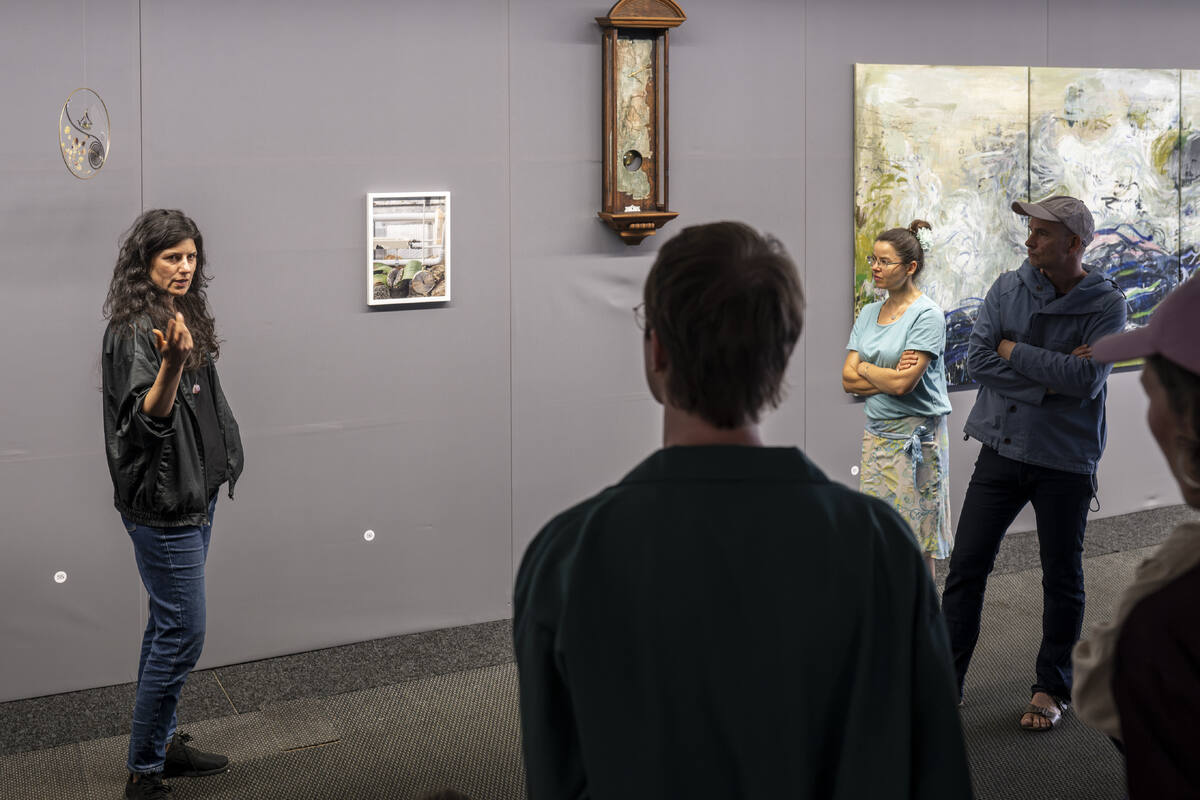
Natalia Schmidt on a tour of the exhibition, Welwitschia mirabilis (# 2, Deutschland Süd-West)
© Werkleitz 2026, Foto: Falk Wenzel
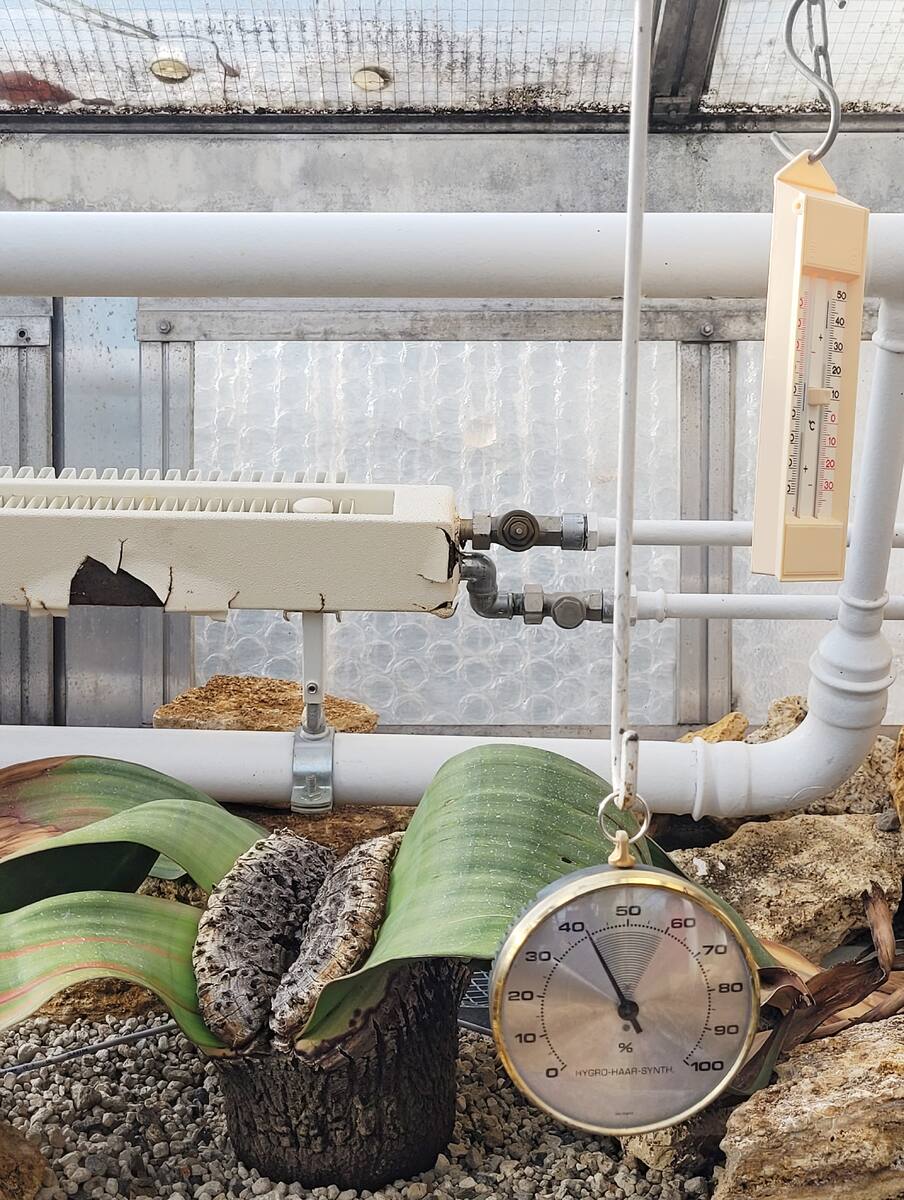
Welwitschia mirabilis (# 2, Deutschland Süd-West), Natalia Schmidt
© Natalia Schmidt
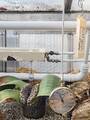
At the heart of the research-based project Amnunition Project: A Composition on Invisible Hands, which has been ongoing since 2012, are ethical questions regarding the colonial and neocolonial logic of economic activity against the backdrop of German and international arms production. During a research trip to Namibia in 2019, Natalia Schmidt visited local uranium mines and discovered the plant Welwitschia mirabilis: This endemic and climate-resistant desert plant is—for the first time in 112 million years—threatened with extinction by the consequences of uranium mining. Its preservation in greenhouses represents a jarring reversal of colonial curiosity: While it is artificially “preserved” in greenhouses in our latitudes, it faces extinction in its natural habitat—a habitat that is being stripped of its resources under conditions that violate human rights, resources that are used in global wars. Thus, the Welwitschia becomes a symbol of genocide and ecocide that transcends space and time into the “human.”
The plant was named after the Austrian botanist Friedrich Welwitsch (1806–1872).
In Afrikaans, it is called tweeblaarkanniedood: “Two-leaves-cannot-die.” The Nama call it ǃkharos or khurub, the Damara nyanka, and the Herero call it onyanga, which means “desert onion.” N`tumbo* is the Angolan name and means “stump.”